Why Proxima Fusion rewrites the fusion energy venture capital deep science startup playbook
Proxima Fusion’s €411 million Series B round at a reported €2.4 billion post-money valuation is the clearest signal yet that a privately backed fusion energy company can now command late stage software-style multiples. The Max Planck Institute spinout is building the Alpha stellarator fusion reactor demonstrator near Munich, positioning its fusion technology as a European champion for clean energy and fusion power rather than a lab scale science project. According to the company’s April 2025 financing announcement and coverage in the Financial Times and Handelsblatt, the round was co-led by XTX Ventures and East X Ventures, with Google and RWE joining the syndicate as new investors. For CEOs, the message is blunt: fusion energy and other deep tech fields have crossed from speculative nuclear fusion research into an investable asset class where generalist capital, strategic power utilities, and specialist ventures now compete.
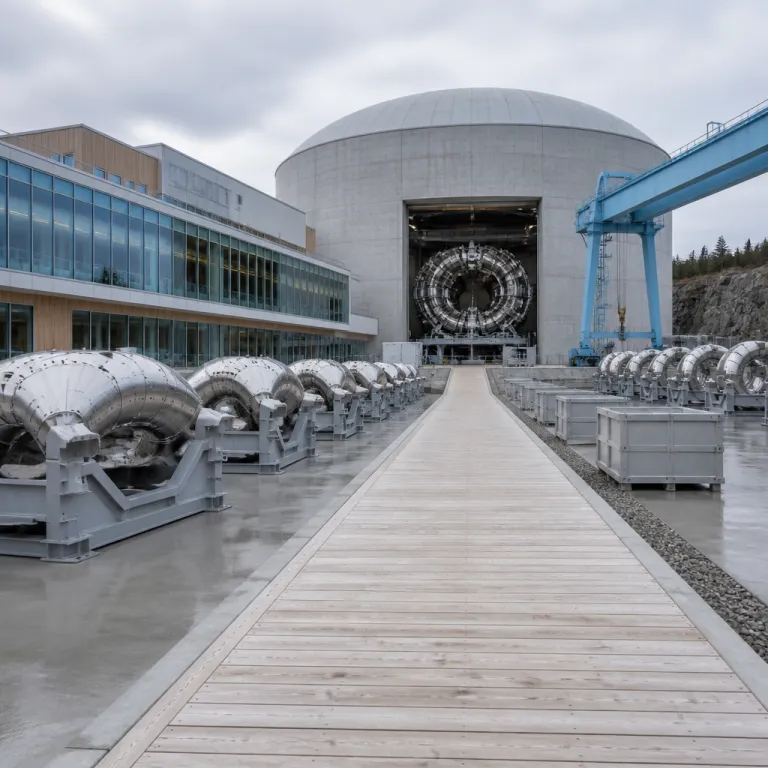
Google, RWE, XTX Ventures, and East X Ventures are not backing Proxima Fusion as a charity case in plasma physics or superconducting magnets research. They are underwriting a long dated fusion systems platform where high temperature and high temperature superconducting technologies, advanced magnets, and stellarator field fusion design could anchor future clean power portfolios and data center energy strategies. In its funding release, Proxima highlighted a technical milestone: completion of the first full-scale prototype module for its high temperature superconducting coil system and a supplier framework agreement for next generation magnet components. This is what separates a fusion energy venture capital deep science startup from a typical early stage software play: the core technology risk, from plasma confinement to superconducting magnets integration, dominates the investment thesis more than go to market execution.
Fusion milestones investors can actually model
The round also lands in a week when Quaise Energy raised 134 million dollars for geothermal drilling, underscoring that climate and energy innovation is broadening beyond solar and wind. Allocators now see fusion, geothermal, and other deep tech energy technologies as a portfolio of options on future clean energy cost curves rather than binary moonshots. Proxima’s own disclosures indicate that the Alpha stellarator demonstrator is targeting first integrated coil tests by 2027 and initial plasma experiments before 2030, timelines that investors can model against power market scenarios and data center demand curves.
Key Alpha stellarator targets
- 2027: integrated testing of the full superconducting coil system
- Before 2030: first plasma experiments in the Alpha stellarator device
For founders, the bar for deep science is rising: investors expect a credible physics report, a clear path from reactor concept to grid connected fusion power, and a team that can translate science into bankable project finance structures. As one Proxima executive framed it in interviews around the raise, the goal is to “turn world-class stellarator research into an industrial fusion platform that Europe can actually deploy at scale.”
Risks and caveats deep science CEOs must acknowledge
Even with this momentum, the fusion energy venture capital deep science startup landscape remains exposed to significant technical, regulatory, and execution risk. Stellarator reactors must still prove stable plasma confinement at scale, superconducting magnets must be manufactured reliably and at cost, and licensing regimes for commercial fusion power plants are still evolving. Timelines for milestones like 2027 coil tests or pre-2030 plasma experiments can slip, and CEOs should be explicit with investors that fusion technology development is a multi-decade journey rather than a quick software-style exit.
Inside the capital stack: quant traders, tech giants, utilities, and deep tech ventures
The Proxima Fusion syndicate looks nothing like a classic SaaS Series B, and that matters for every fusion energy venture capital deep science startup now in the market. XTX Ventures, the venture arm of quantitative trading firm XTX Markets, co leads with East X Ventures, while Google and German utility RWE join as strategic investors alongside other climate and deep tech funds. This mix of quant driven capital, big tech balance sheets, and energy strategics signals that fusion technology and nuclear fusion adjacent plays are now being underwritten by investors who think in decades and model power markets, not just software KPIs.
A staged capital stack for fusion and climate infrastructure
For CEOs, the lesson is that the right ventures syndicate must map to your technology and deployment timeline, not to a generic tech funding template. A fusion reactor or advanced fusion systems platform will require multiple capital cycles that build on one another rather than a single oversized equity round. In practice, that progression tends to follow a clear sequence:
- Early equity from deep tech ventures and specialist climate funds to underwrite physics risk and early engineering
- Strategic capital from utilities, industrials, and big tech once core fusion technology is validated in demonstrators
- Project equity and infrastructure finance when fusion power plants or other clean energy assets approach bankability
Proxima’s own capital stack, which now totals more than €650 million across seed, Series A, and Series B rounds as reported in its investor materials, illustrates how successive raises can be tied to physics milestones, engineering validation, and regulatory engagement. That is why allocators are watching how Proxima Fusion aligns its cap table with its roadmap for magnets manufacturing, plasma control software, and high temperature superconducting coil industrialization.
Google’s participation is a strategic hedge on energy and technology convergence, where data center power demand, AI workloads, and clean energy constraints collide. RWE’s stake is a bet that owning insight into fusion energy and nuclear fusion timelines will shape its long term clean power portfolio, even if commercial fusion slips. In interviews around the round, Proxima’s leadership framed the deal as “a way to bring industrial partners into the lab early, so that what we build can actually plug into the grid.” For generalist funds entering climate tech’s second wave, the Proxima Fusion deal sits alongside geothermal and grid software plays as a template for structuring deep science exposure, and it echoes the dynamics described in analyses of why generalist VCs are entering the climate and clean energy market.
Strategic playbook for deep science founders structuring fusion and climate capital
Proxima Fusion has raised more than 650 million euros in under three years, which should prompt every fusion energy venture capital deep science startup CEO to rethink syndicate design from day one. The pattern emerging across fusion, geothermal, and other deep science ventures is a staged capital stack: early stage equity from specialist funds comfortable with deep tech and deep science risk, followed by strategic capital from corporates that will eventually buy, build, or operate the assets. Later, infrastructure investors and project finance lenders step in once fusion power plants, geothermal wells, or advanced nuclear projects clear technical and regulatory milestones.
Founders should map investors to milestones with the same rigor they apply to reactor design or plasma simulations. In fusion, that means pairing early deep tech ventures with industrials that understand superconducting magnets supply chains, high temperature materials, and grid integration, while keeping room for generalist capital that can price risk across tech cycles. A CEO building a fusion technology platform or field fusion diagnostics business should also study how other sectors structure strategic M&A and capital recycling, for example in analyses of strategic mergers and acquisitions for resilient growth, because the same logic will apply when utilities consolidate fusion assets.
European founders in particular should read the Proxima Fusion round as proof that non US capital can scale deep science if the narrative links science, energy security, and industrial policy. Funds like Ankur Capital and its climate focused vehicles, sometimes referenced as ventures Ankur, show how emerging market investors are also experimenting with deep tech and clean energy theses that could intersect with fusion energy or advanced nuclear. For CEOs weighing venture capital versus debt or blended instruments, resources on how startup loans can shape company strategy are increasingly relevant, because the cost of capital will compound over the long duration of fusion reactor development and commercialization.