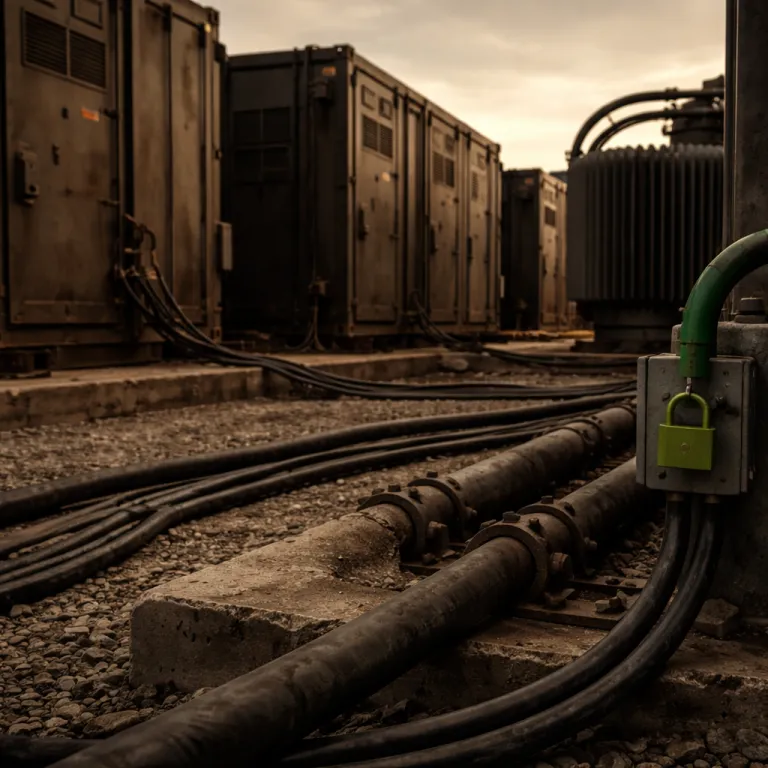
Why AI infrastructure venture capital breaks the SaaS playbook
Crusoe’s 1,38 billion dollars Series E at a 10 billion dollars valuation crystallises a shift that CEOs and partners can no longer ignore. AI infrastructure venture capital is coalescing into a distinct asset class where contracted capacity, long duration energy access, and data center optionality matter more than annual recurring revenue multiples or net dollar retention. Treating these infrastructure heavy companies like traditional enterprise software firms leads to mispriced risk, distorted market intelligence, and weak board level guidance.
In compute intensive businesses, the core assets are physical infrastructure, energy contracts, and data centers rather than just code, so the capital stack must blend equity, private credit, and sometimes project finance instead of relying only on dilutive venture capital rounds. These companies build solutions that turn stranded energy into usable compute, arbitrage power prices across global markets, and secure access to critical minerals supply chains that underpin GPU manufacturing. When CEOs view these firms through a pure software lens, they underweight grid interconnection risk, services law constraints on cross border energy trading, and the fragility of global trade routes for hardware logistics.
Revenue quality still matters, but the underwriting centre of gravity moves toward contracted megawatts, term length, and counterparty quality in both private and public markets. Market intelligence for AI infrastructure venture capital therefore needs new indices that track energy cost basis, utilisation rates, and private markets pricing for long term capacity rather than only software solutions benchmarks. For strategy leaders, the key question is not how fast top line data grows, but how resilient the infrastructure and capital structure remain under stress scenarios in the united states, the middle east, and other volatile energy regions.
The three variables that actually drive AI infra value
For AI infrastructure venture capital, three variables dominate valuation mechanics; contracted capacity, energy cost basis, and customer duration. Contracted capacity translates directly into predictable cash flows, so investors treat multi year take or pay agreements almost like infrastructure equity with embedded software upside rather than pure growth equity. When these contracts are signed with hyperscalers, law firms, and large enterprise software companies, they anchor both private equity style returns and private credit appetite for non recourse financing.
Energy cost basis is the second pillar, because every basis point of spread between input energy and compute pricing compounds across the life of the asset. Crusoe’s model of capturing flared gas shows how energy arbitrage can turn environmental liabilities into profitable services, while similar case studies in the united states and the middle east highlight the role of grid access and services law in shaping margins. CEOs evaluating such firms must interrogate not only headline power purchase agreements but also the resilience of supply chains for generators, transformers, and critical minerals that feed long term maintenance cycles.
Customer duration completes the triad, since long contracts with sticky workloads behave more like private markets infrastructure assets than short term software subscriptions. This is where structured capital becomes strategic, as private credit facilities, hybrid equity instruments, and secondary transactions can smooth CapEx heavy buildouts without crushing early shareholders, a topic explored in depth through strategic insights for CEOs on unlocking value through secondary funds. Boards should insist that every investment memo on AI infrastructure venture capital explicitly models renewal probabilities, cross default clauses, and downside cases where market conditions tighten and credit spreads widen.
Rethinking capital structure, market sizing, and sector focused funds
Traditional SaaS style market sizing double counts hyperscaler CapEx, because it treats both cloud providers and downstream AI infrastructure venture capital backed companies as independent markets. A more rigorous view separates the primary energy and data center layers from the software solutions and machine learning services that sit on top, then maps where value actually accrues across supply chains and global trade flows. Sector focused funds that specialise in AI infrastructure, enterprise software, and professional services around data centers can then allocate capital with clearer indices of risk and return.
On capital structure, the right mix of equity and credit becomes a strategic weapon rather than a back office detail. CapEx heavy infrastructure in AI requires structured private credit, export finance, and sometimes asset backed facilities, while equity rounds fund market expansion, software development, and market intelligence capabilities that differentiate services in crowded markets. CEOs should work with law firms that understand services law across the united states and the middle east to structure cross border vehicles, protect data sovereignty, and align governance with the expectations of global institutional investors in private equity and venture capital.
For investment committees, a partner memo on Crusoe or any similar AI infrastructure venture capital play should foreground contracted megawatts, energy sourcing risk, and customer concentration before discussing software roadmaps or artificial intelligence features. Sector focused funds that build internal expertise on data centers, critical minerals logistics, and machine learning workloads will outperform generalist firms that rely on generic market views or recycled case studies from pure software companies, especially as private markets reprice risk. CEOs who want a sharper collective intelligence framework for strategic leadership can draw on specialised analysis of venture ecosystems, then adapt those insights to their own capital allocation, board composition, and sector entry timing.
Key quantitative signals in AI infrastructure venture capital
- Crusoe’s 1,38 billion dollars Series E at a 10 billion dollars valuation underscores investor willingness to fund CapEx intensive AI infrastructure at late stage venture capital pricing.
- AI infrastructure ventures increasingly blend equity and private credit, with some deals allocating a majority of capital to non dilutive facilities secured against data centers and contracted capacity.
- Energy cost basis and contract duration now drive a significant share of valuation variance across AI infrastructure portfolios compared with traditional software markets.
Questions CEOs also ask about AI infrastructure venture capital
How should CEOs evaluate AI infrastructure venture capital opportunities versus pure software investments ?
CEOs should evaluate AI infrastructure venture capital opportunities by focusing on contracted capacity, energy sourcing, and capital intensity rather than only software metrics such as annual recurring revenue or net dollar retention. The analysis must integrate infrastructure style risk assessment, including grid access, regulatory exposure, and supply chain resilience for hardware and critical minerals. Pure software investments remain attractive, but they sit on a different risk return curve and should not be benchmarked with the same multiples as data center and energy linked companies.
What role does capital structure play in AI infrastructure venture capital backed companies ?
Capital structure is central in AI infrastructure venture capital backed companies because large upfront CapEx for data centers and energy assets cannot be efficiently financed with equity alone. Blending private credit, project finance, and structured equity allows firms to scale infrastructure while preserving ownership for founders and early investors. CEOs should treat debt covenants, tenor, and interest rate exposure as strategic levers that shape long term competitiveness, not just as finance department details.
How can sector focused funds avoid double counting when sizing AI infrastructure markets ?
Sector focused funds can avoid double counting by clearly separating the value pools of hyperscaler CapEx, independent data center operators, and software solutions built on top of those layers. Market sizing should map flows of energy, compute, and data across supply chains, then assign revenue only once at the point where economic value is captured. This disciplined approach prevents inflated total addressable market figures and leads to more realistic underwriting for AI infrastructure venture capital investments.
Why are long term energy contracts so important for AI infrastructure ventures ?
Long term energy contracts lock in a predictable cost basis, which is critical when selling compute capacity into volatile markets for artificial intelligence and machine learning workloads. These contracts transform part of the business into an infrastructure like asset with stable cash flows that can support private credit facilities and lower the weighted average cost of capital. Without durable energy agreements, even the best positioned AI infrastructure venture capital backed firms face margin compression and refinancing risk.
What governance capabilities should CEOs build to work effectively with AI infrastructure venture capital investors ?
CEOs should build governance capabilities that integrate technical understanding of data centers and software with financial literacy around equity, credit, and private markets instruments. Boards need members who can interrogate market intelligence, stress test capital structures, and navigate services law across multiple jurisdictions. This combination of operational and financial expertise enables more productive relationships with AI infrastructure venture capital investors and better strategic decisions over the full life cycle of the assets.
Sources : Crunchbase ; DWF Venture Capital Guide ; industry reports on AI infrastructure and energy markets.